How Long Does It Take To Boil A Hard Egg . You can also add a pinch of salt to the water to get it to boil faster. Once the water is at a rolling boil, turn off the heat and cover the pot with the lid. How To Boil Eggs Perfectly So They Peel Easily Keto Vale from www.ketovale.com Once boiling, turn off the heat and cover the pot. 6 minutes for medium boiled; How long should i boil 20 eggs?
Can Viruses Reproduce Outside Of A Host Cell. They have no independent metabolism and. Outside of their host cell, viruses are inert or metabolically inactive.
If the purpose of a virus is to replicate, why do viruses from www.quora.com
The nucleic acid of bacteriophages enters the host cell “naked,” leaving the capsid outside the cell. A virus that is outside of a host cell is known as a virion. For most viruses, the molecular basis for this specificity is that a particular surface molecule known as the viral receptor must be found on the host cell surface for the virus to attach.
Viruses Cannot Replicate Unless Absorbed By Cells In Our Body.
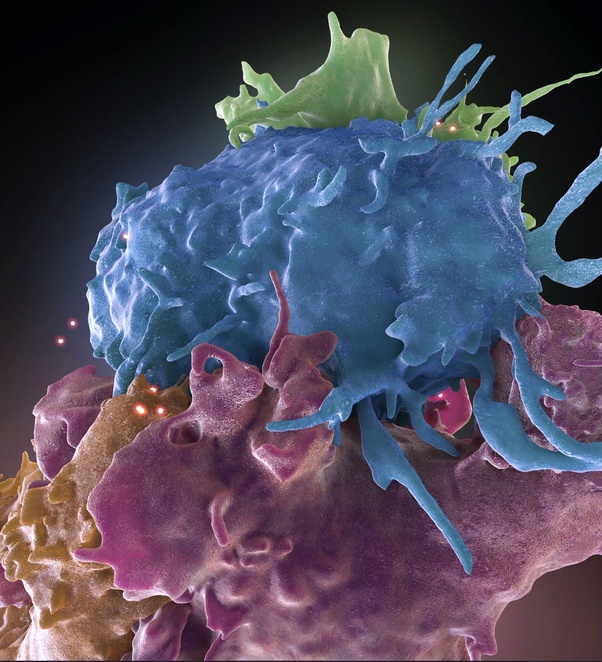
Instead, viruses have to invade a living cell and hijack its genetic machinery in order to reproduce. The reproductive cycle of viruses is complex and interesting. In this regard viruses must approach their respective host for reproductive components.
A Virus Is An Infectious Microbe That Is Not Considered Alive.
It consists of genes and protective coating but has no cell. When outside the body, these capsids degrade faster in cold, dry environments. Viruses may enter a host cell either with or without the viral capsid.
At The Most Basic Level, Viruses Consist Of Genetic Material Contained Within A.
A virus can't reproduce without a host and therefore isn't considered living. To do it, they need a host, that is, a living organism. Although the replicative life cycle of viruses differs greatly between species and category of virus, there are six basic stages that are essential for viral replication.
For Most Viruses, The Molecular Basis For This Specificity Is That A Particular Surface Molecule Known As The Viral Receptor Must Be Found On The Host Cell Surface For The Virus To Attach.
Inside this organism, viruses can replicate themselves, while outside they’re likely to. A virus is, as we’ve established, inactive while outside of a host cell. “live” is not exactly the appropriate term, as viruses are not really alive because they cannot reproduce by themselves.
They Lend Support To This Hypothesis, As Their Dependence On Parasitism Is Likely To Have Caused The Loss Of Genes That Enabled Them To Survive Outside A Cell.
A cold virus can sometimes survive on indoor surfaces for several days, although its ability to cause infection drops dramatically. Some biologists currently see the virus as a nonliving infectious particle. Viruses are right on the border between living and nonliving.
Comments
Post a Comment